


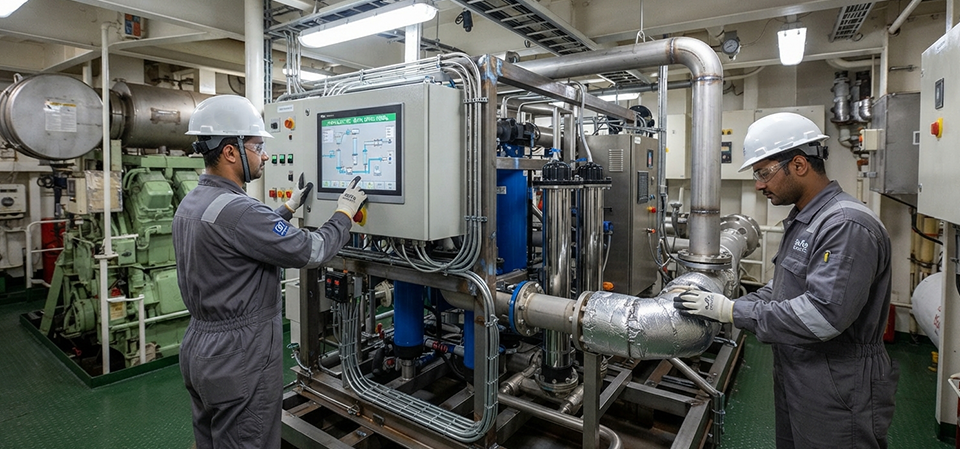
BWTS (Ballast Water Treatment Systems) — Prefabrication, Supply & Installation
The introduction of the IMO Ballast Water Management Convention transformed Ballast Water Treatment Systems from an optional upgrade into a mandatory requirement for the vast majority of vessels trading internationally. For ship owners, this has meant planning and executing one of the more complex retrofit projects a vessel is likely to undergo — one that touches structural, mechanical, and electrical systems simultaneously. Sofia Electric provides complete, end-to-end BWTS project delivery, covering prefabrication, supply, and installation under a single coordinated scope.
Why BWTS Retrofits Are More Complex Than They Appear
Unlike many onboard system upgrades, a BWTS installation isn’t a simple bolt-on addition. It typically requires structural modification to accommodate the treatment unit’s footprint, new piping runs connecting the system into the vessel’s existing ballast infrastructure, electrical integration with the ship’s power distribution system, and control system programming to ensure the unit operates correctly alongside existing pumps and valves. Each of these elements needs to be planned and executed correctly for the completed system to function reliably and pass the commissioning tests required for compliance.
Prefabrication: Reducing Time Onboard
The first stage of our BWTS service is prefabrication — preparing foundations, pipe spools, and structural supports in advance of the vessel’s arrival, based on approved engineering drawings. Because this work doesn’t require the vessel to be present, it can proceed on a schedule independent of the ship’s operational commitments, meaning that by the time the vessel arrives for installation, a substantial portion of the physical work is already complete. This approach is consistently the most effective way to minimize the time a vessel spends out of active service during a BWTS retrofit.
Supply: Matching the System to the Vessel
Selecting the right treatment system requires more than choosing a type-approved unit — it requires matching the system’s capacity, flow rate, and technology to the vessel’s specific ballast water needs and operating profile. Factors such as typical trading routes, water conditions, and existing ballast pump capacity all influence which system will perform reliably in practice, not just in laboratory testing conditions. Our team works with owners to identify the appropriate system specification, sourcing equipment that fits both the vessel’s technical requirements and its classification society approval.
Installation: Mechanical, Electrical, and Control Integration
Once the vessel arrives, our installation team carries out the mechanical fitting of the treatment unit and associated piping, electrical connection to the vessel’s power system, and control system integration to ensure the unit communicates correctly with existing ballast pumps and valves. This is genuinely multidisciplinary work, and having structural, mechanical, and electrical trades within a single team — rather than coordinating separate contractors for each discipline — significantly reduces the risk of delays caused by miscommunication or scheduling conflicts between parties unfamiliar with working together.
Commissioning and Compliance Verification
Installation isn’t complete until the system has been properly commissioned and tested. This involves running the treatment system through its full operational cycle, verifying that ballast water is treated to the required biological standard, and confirming that all control sequences function correctly without manual workarounds. We work through this process methodically, since issues identified and corrected during commissioning are far less costly and disruptive than issues discovered later, once the vessel is relying on the system during actual operations and away from a repair facility.
Common Challenges in BWTS Retrofits
Certain challenges recur across BWTS projects, and our experience with previous installations helps us anticipate and manage them proactively. Space constraints are common on vessels not originally designed with a treatment system in mind, sometimes requiring creative structural solutions to properly accommodate the unit and its piping. Electrical load calculations occasionally reveal that a vessel’s existing power distribution needs upgrading to support the new system’s demands. And coordinating effectively between the system manufacturer’s technical specifications, classification society requirements, and the vessel’s own engineering team is essential to avoid the kind of miscommunication that leads to delays.
Ongoing Maintenance After Installation
Compliance doesn’t end at commissioning — BWTS units require ongoing maintenance, including servicing filters, UV lamps, or dosing systems depending on the technology installed, along with periodic verification that performance continues to meet the required standard as components age. We can support owners with this ongoing maintenance, helping avoid compliance gaps that might otherwise be discovered during a port state control inspection.
Working Around Vessel Schedules
We understand that a BWTS retrofit competes for priority against a vessel’s commercial commitments, which is why we work closely with owners and operators to plan installation timing around sailing schedules, charter commitments, and other planned maintenance, rather than treating the retrofit as an isolated project disconnected from the vessel’s broader operational calendar. Where possible, we coordinate BWTS installation alongside other planned maintenance or survey work, allowing owners to consolidate out-of-service time rather than scheduling multiple separate periods of disruption.
Supporting Documentation for Compliance Verification
A completed BWTS installation needs to be backed by thorough documentation — commissioning test results, system certification records, and updated Ballast Water Management Plans — to satisfy port state control inspections and demonstrate ongoing compliance. We ensure this documentation is properly prepared and handed over as part of every installation, giving owners the paperwork trail needed to confidently demonstrate compliance whenever it’s requested.
In Conclusion
A BWTS retrofit is a significant undertaking, but with the right planning and a single, coordinated team managing prefabrication, supply, and installation together, it doesn’t need to become a prolonged disruption to vessel operations. Our approach is built specifically to minimize the time your vessel spends out of service while ensuring the completed installation performs reliably and holds up to inspection for years of compliant operation.
Frequently Asked Questions
What's included in your BWTS service?
How long does a typical BWTS installation take?
Will you help select the right treatment system for our vessel?
services
download brochure
Please download our document to see specific data’s to our work and services.

Let’s Start Work Together
Sharjah, United Arab Emirates
info@sofiaelectric.com
09.00AM – 18.00PM
