



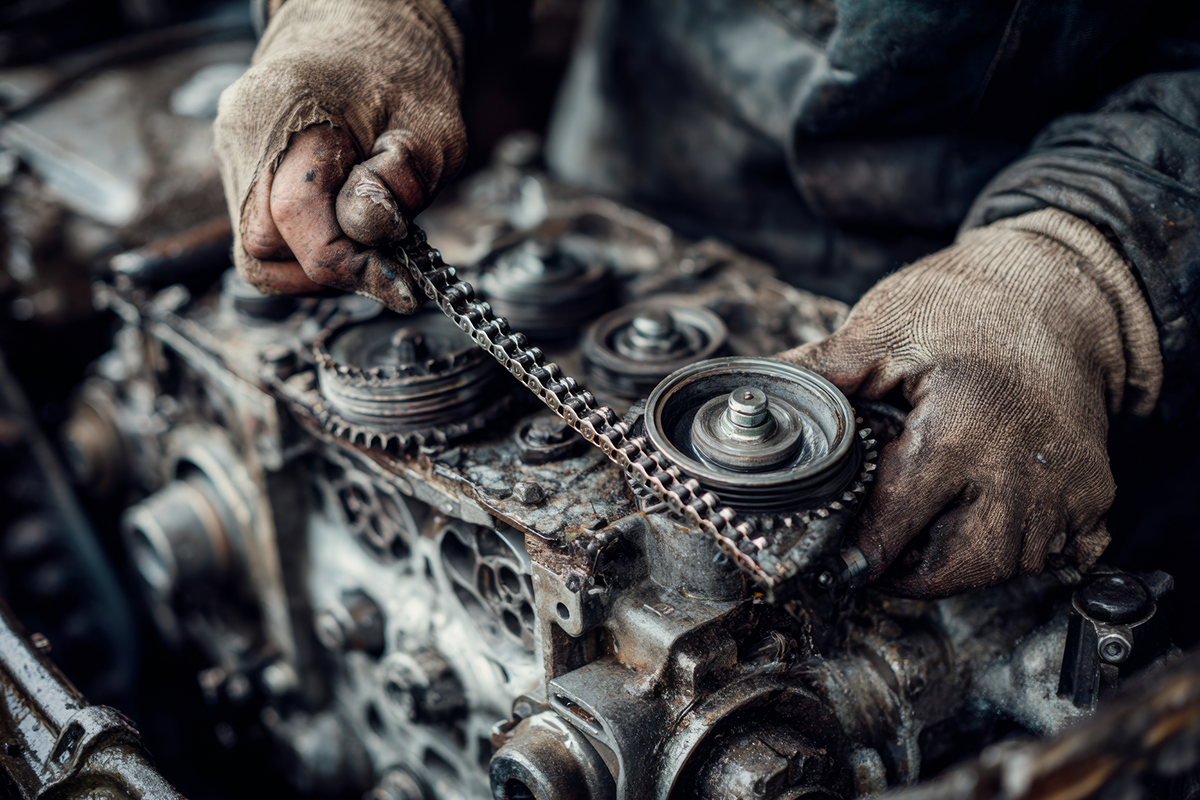
Electrical motors are among the hardest-working components in any marine or industrial operation, driving pumps, fans, winches, and countless other systems that keep operations running. Yet they’re often overlooked until they fail completely — at which point the cost of emergency replacement, lost production time, and rush repairs can far exceed what routine overhauling would have cost in the first place. For operators across Sharjah, Dubai, Abu Dhabi, and the broader UAE, treating motor overhauling as a scheduled investment rather than a reactive expense makes a measurable, cumulative difference to the bottom line.
Why Motors Wear Down Over Time
Continuous operation, exposure to moisture or corrosive environments, temperature cycling, and normal mechanical wear all take a steady toll on motor windings, bearings, and insulation. None of these factors cause immediate failure on their own — instead, they compound gradually, until a motor that was functioning normally develops a fault seemingly overnight. In reality, that “sudden” failure was usually years in the making, driven by small issues that went unaddressed.
Bearing wear is one of the most common failure points, since bearings carry the mechanical load of the rotating shaft and are subject to constant friction. Insulation breakdown is another, often accelerated by heat, moisture ingress, or voltage irregularities. Left unaddressed, either of these issues can progress from a manageable, low-cost repair into a full motor failure requiring complete rewinding or replacement.
The True Cost of a Sudden Motor Failure
An unexpected motor failure rarely affects just one component in isolation. Depending on what the motor drives, a failure can halt an entire production line, delay a vessel’s departure while a replacement is sourced and installed, or take a critical system — a cooling pump, a ventilation fan, a winch — offline until repairs are complete. These downstream costs typically dwarf the price of a scheduled overhaul: lost production, missed deadlines, emergency labor rates, and in marine contexts, potential charter penalties or delayed sailing.
There’s also the sourcing problem. A motor overhaul, planned in advance, allows time to source the correct parts and schedule the work around operational needs. An emergency motor failure, by contrast, often means paying premium rates for expedited parts and labor, with no guarantee that a suitable replacement is readily available.
What a Proper Overhaul Involves
A thorough motor overhaul goes well beyond a quick visual inspection. It typically includes full mechanical disassembly, cleaning, and inspection of all components, bearing replacement, and — where testing reveals winding degradation — full winding removal and rewinding to the correct specification. The rotor is checked and balanced, seals and gaskets are replaced, and the unit is reassembled and tested before being returned to service.
Testing after reassembly is a critical, and sometimes overlooked, part of the process. Insulation resistance testing confirms that the windings will hold up under operating voltage, running temperature is monitored under load to confirm the motor isn’t running hotter than it should, and vibration is checked to confirm proper balance and alignment. This restores the motor as close as possible to its original operating specification, rather than offering only a temporary fix that addresses symptoms without resolving underlying wear.
Building a Preventive Maintenance Schedule
Rather than waiting for failure, many operators now schedule motor inspections and overhauls at fixed intervals based on run hours or operating conditions, rather than reacting only when a fault becomes obvious. This approach — sometimes called condition-based or planned maintenance — catches early wear before it becomes a costly breakdown, extending the operational life of expensive machinery considerably beyond what reactive maintenance alone would achieve.
A well-structured schedule typically accounts for the specific operating environment of each motor: units running continuously in harsh, corrosive, or high-vibration environments generally need more frequent attention than those operating intermittently under milder conditions. Working with an experienced provider to establish sensible intervals — rather than applying a generic schedule across all equipment — helps ensure maintenance spend is directed where it delivers the most value.
Calculating the Real Return on Preventive Overhauling
When operators compare the cost of scheduled overhauling against the cost of reactive repair following failure, the difference is rarely marginal. Scheduled overhaul work is planned, competitively priced, and carried out without the urgency premiums that come with emergency repair. It also avoids the secondary costs of downtime — lost output, missed schedules, and in marine operations, potential penalties tied to delayed sailing. Viewed over the operational life of a fleet of motors, the cumulative savings from a disciplined maintenance program are substantial.
How to Tell When a Motor Needs Overhauling Versus Replacement
One question operators frequently face is whether a struggling motor is worth overhauling at all, or whether replacement is the more sensible option. Generally, if the motor’s core components — the frame, shaft, and rotor — remain in sound condition, and the issues are limited to windings, bearings, and seals, overhauling is typically far more cost-effective than replacement, often costing a fraction of a new unit while restoring near-original performance.
Replacement becomes the better option when a motor has suffered repeated failures despite proper maintenance, when the frame or rotor itself shows significant damage, or when a newer, more efficient motor would offer meaningful energy savings that justify the additional upfront cost. A transparent repair partner should be willing to make this recommendation honestly, even when it means less overhaul work, because guiding a client toward the right long-term decision builds far more trust than pushing an overhaul that isn’t genuinely the best option.
The Role of Testing in Catching Problems Early
Modern motor diagnostics have made it considerably easier to catch developing faults before they cause failure. Insulation resistance testing, conducted periodically rather than only when a problem is suspected, can reveal gradually deteriorating winding insulation long before it causes an actual short. Vibration analysis can detect bearing wear or misalignment at a stage where a simple bearing replacement resolves the issue, rather than waiting until the bearing seizes and damages the shaft or housing in the process.
Thermal imaging is another useful tool, capable of identifying hot spots in windings or connections that indicate developing resistance issues, often before they’re detectable through any other means. Incorporating these diagnostic checks into a routine maintenance schedule, rather than relying solely on scheduled overhauls at fixed intervals, allows maintenance spend to be directed precisely where it’s needed rather than applied uniformly regardless of actual condition.
Common Mistakes That Shorten Motor Lifespan
Several avoidable mistakes commonly shorten motor lifespan and increase long-term maintenance costs. Running motors consistently at or above their rated load accelerates insulation aging and bearing wear considerably faster than operating within design parameters. Neglecting proper lubrication schedules for bearings — either under-greasing, which accelerates wear, or over-greasing, which can damage seals and cause overheating — is a surprisingly common and entirely preventable cause of premature bearing failure.
Poor alignment during installation or after maintenance work is another frequent culprit, placing uneven stress on bearings and couplings that manifests as vibration and accelerated wear over time. And inadequate protection from moisture or corrosive atmospheres, particularly in marine environments, can dramatically shorten the service life of even a well-built motor if appropriate sealing and ventilation aren’t maintained.
Calculating Your Own Overhaul Return on Investment
Operators can build a straightforward business case for scheduled motor overhauling by comparing three figures: the cost of a scheduled overhaul, the estimated cost of an emergency replacement including expedited parts and labor, and the estimated cost of downtime per hour or per day for the system that motor drives. In most industrial and marine contexts, the combined cost of emergency replacement and associated downtime substantially exceeds the cost of a planned overhaul completed before failure occurs — often by a factor of several times over, once lost production or delayed sailing is properly accounted for.
In Conclusion
Regular motor overhauling isn’t an added expense to be deferred when budgets are tight — it’s a cost-control strategy that pays for itself repeatedly over the life of your equipment. Businesses that build it into their maintenance planning consistently spend less, experience fewer unplanned outages, and extend the useful life of their machinery, compared to those that wait for failure to force their hand.
